Engineering can tell you how much compute a product uses. Finance can tell you how much the cloud invoice was last month. The hard part is connecting the two: knowing what each team, product and customer actually costs, booking it correctly and paying only what you owe.
That's what cloud financial management is for. This article covers what it is, who should own it and the best practices that keep cloud spending predictable, from the budget to the invoice.
What is cloud financial management?
Cloud financial management is the practice of planning, tracking, allocating, validating and reporting cloud spending so finance and technology teams can manage it like any other business cost. It covers budgets and forecasts, cost allocation, invoice validation, accounting and the link between cloud spend and business value.
It's related to cloud cost management, but the focus is different. Cloud cost management asks whether you're using the cloud efficiently. Cloud financial management asks whether you can plan it, explain it, book it and pay it correctly.
Who owns cloud financial management?
Nobody can do it alone. The best results come when each team owns its part and they meet regularly.
| Team | What it owns |
|---|---|
| Finance and FP&A | Budgets, forecasts, allocation rules and reporting |
| IT and engineering | Usage, architecture, tagging and optimization |
| Procurement | Contracts, commitments and negotiations with providers |
| Accounts payable | Invoice validation, coding and payment |
| Business owners | Deciding whether the spend is worth it |
9 cloud financial management best practices
1. Give cloud spend a shared owner
Set up a small group with finance, IT, procurement and AP, and give it a monthly meeting and a clear mandate. Many companies call it a FinOps team; the name matters less than having one place where cloud costs are discussed and decided.
2. Build an allocation model finance can book
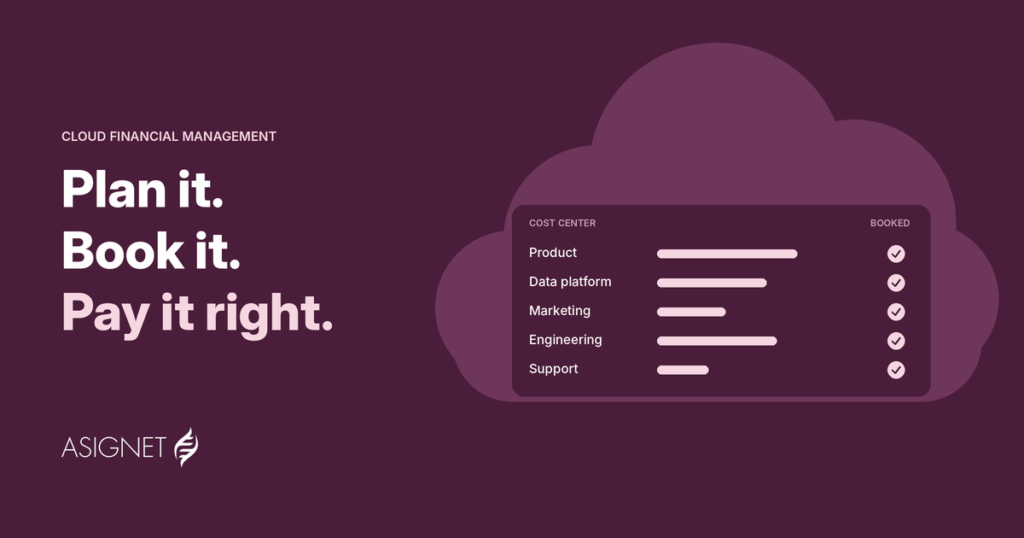
Tags are a start, not an answer. Turn tags, accounts and projects into a mapping that finance can post to cost centers, and agree up front how shared costs (networking, support, security) are split. If a cost can't be allocated, it can't be managed.
3. Budget and forecast from usage, not last year
Cloud costs move with usage, so last year's number plus a percentage rarely works. Build forecasts from what drives the bill (users, transactions, environments, data) and update them monthly.
4. Track unit costs
Total spend going up isn't always bad; spend going up faster than the business is. Track a few unit costs, such as cost per customer, per transaction or per product, so leaders can see whether growth is efficient.
5. Manage commitments like contracts
Reserved instances, savings plans and committed-use discounts are financial commitments. Keep them on a calendar with owners, check coverage every month and review them before they expire or renew.
6. Validate every cloud invoice before you pay it
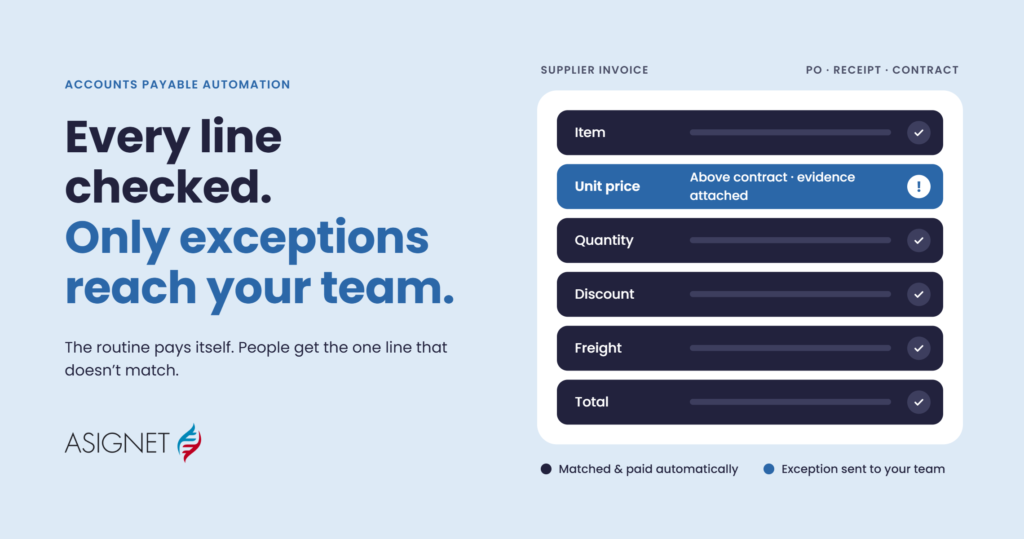
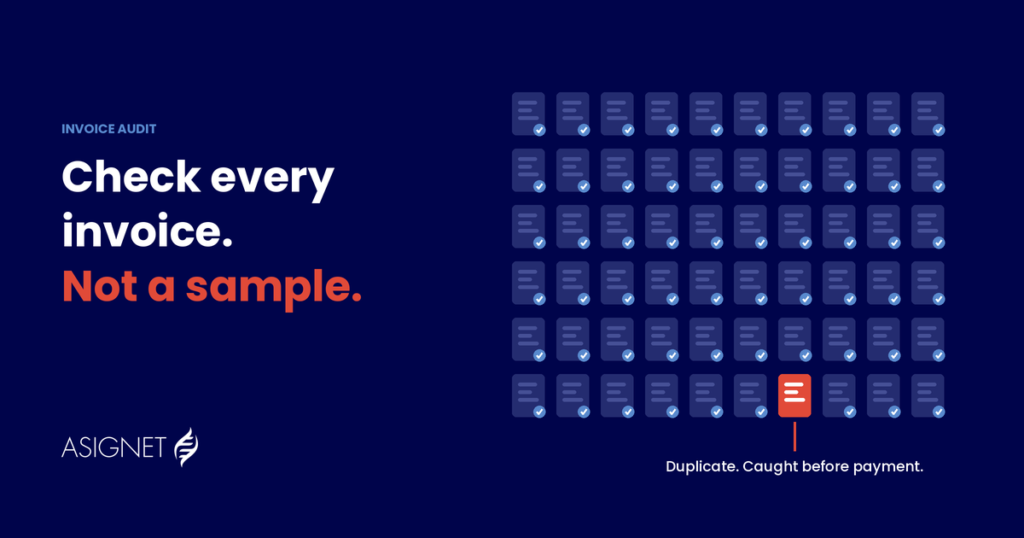
The cloud invoice is the last checkpoint before money leaves. Check each line against usage data and contract terms, confirm discounts and credits were applied, and send differences back to the provider. Asignet's invoice validation does this for every cloud invoice, across providers.
7. Close the books cleanly
Usage-based bills often arrive after the month closes. Agree on how to accrue cloud costs, which data to use for the estimate and how to true it up when the invoice arrives, so cloud doesn't distort monthly results.
8. Bring SaaS and AI into the same process
Many SaaS and AI services now bill by usage, credits or tokens, just like the cloud. Manage them with the same allocation, forecasting and invoice checks instead of treating them as a separate problem. SaaS management helps track licenses and usage in the same place.
9. Report in business terms
Engineers need resource-level detail; executives need to know what changed, why and what it means for the budget. Build one monthly report for leadership that explains cloud spend by team, product and unit cost, not by service name.
What to look for in cloud-based expense management software
Cloud financial management depends on good data. When you evaluate cloud-based expense management software, look for these capabilities from a finance point of view:
| Capability | Why it matters to finance |
|---|---|
| All providers in one place | AWS, Azure, Google Cloud and others in one view, with one set of rules |
| Line-level invoice validation | Errors and missing discounts caught before payment |
| Allocation to cost centers | Costs ready to post, without a monthly spreadsheet |
| Anomaly detection | Unexpected spikes flagged in days, not at month-end |
| ERP and AP integration | Clean, coded data flowing into approvals, payment and the general ledger |
| A team behind the tool | Someone to validate, dispute and keep the setup current |
How Asignet helps
Asignet's Cloud Expense Management gives finance and IT one view of cloud spending across providers:
- Invoice validation against usage, contracts and approved services before payment.
- Cost allocation to departments, projects, users and cost centers.
- Anomaly detection for unexpected usage and idle or misconfigured resources.
- Finance integration with AP, the general ledger and reporting tools.
- Disputes handled with providers when a charge is wrong, through our billing dispute team.
The same platform covers SaaS, telecom and mobile spend, so cloud is managed alongside the rest of your technology costs.
Make cloud spend predictable
Asignet validates every cloud invoice, allocates each cost to the right cost center and sends clean data to AP and the general ledger. See Cloud Expense Management.
Frequently asked questions
What is cloud financial management?
Cloud financial management is the practice of planning, tracking, allocating, validating and reporting cloud spending so finance and technology teams can manage it like any other business cost.
What is the difference between cloud financial management and cloud cost management?
Cloud cost management focuses on using the cloud efficiently: rightsizing, removing idle resources and buying discounts. Cloud financial management adds the finance side: budgets, forecasts, allocation, invoice validation, accounting and reporting.
Who is responsible for cloud financial management?
It's shared. Finance owns budgets, forecasts and reporting; IT and engineering own usage; procurement owns contracts and commitments; accounts payable validates and pays invoices.
What are the best practices for cloud financial management?
Give cloud spend a shared owner, build an allocation model finance can book, forecast from usage, track unit costs, manage commitments like contracts, validate every invoice, close the books cleanly, include SaaS and AI, and report in business terms.
What is cloud-based expense management software?
Software that collects cloud invoices and usage data from every provider, validates the charges, allocates costs to cost centers and sends clean data to AP and the general ledger.