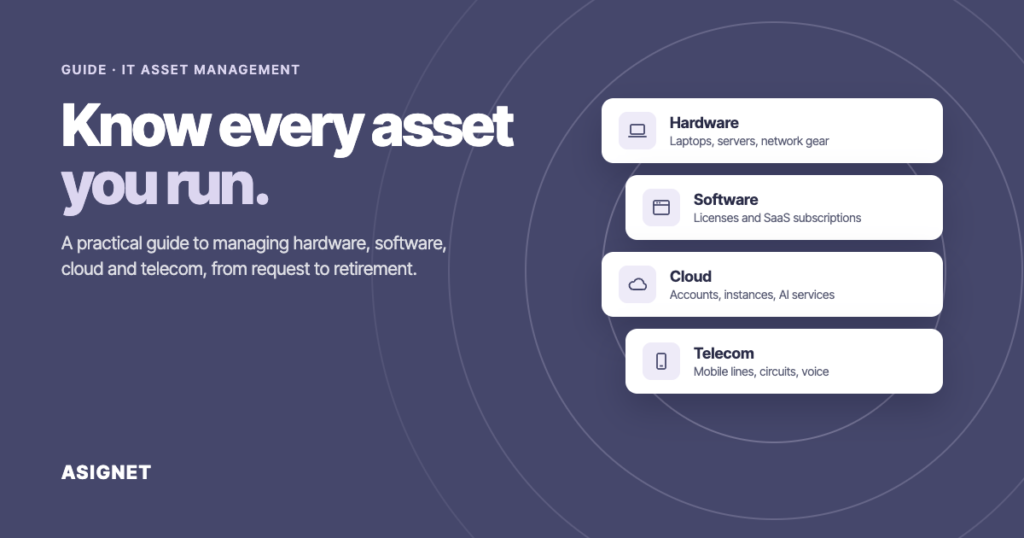
IT asset management (ITAM) used to be a record-keeping job: log the hardware, track the licenses and contracts, and note when a device was retired. Today it sits at the center of cost control, security and compliance. Software audits are more frequent, AI tools are spreading faster than IT can track them, and the asset estate now spans laptops, mobile devices, SaaS subscriptions and cloud resources.
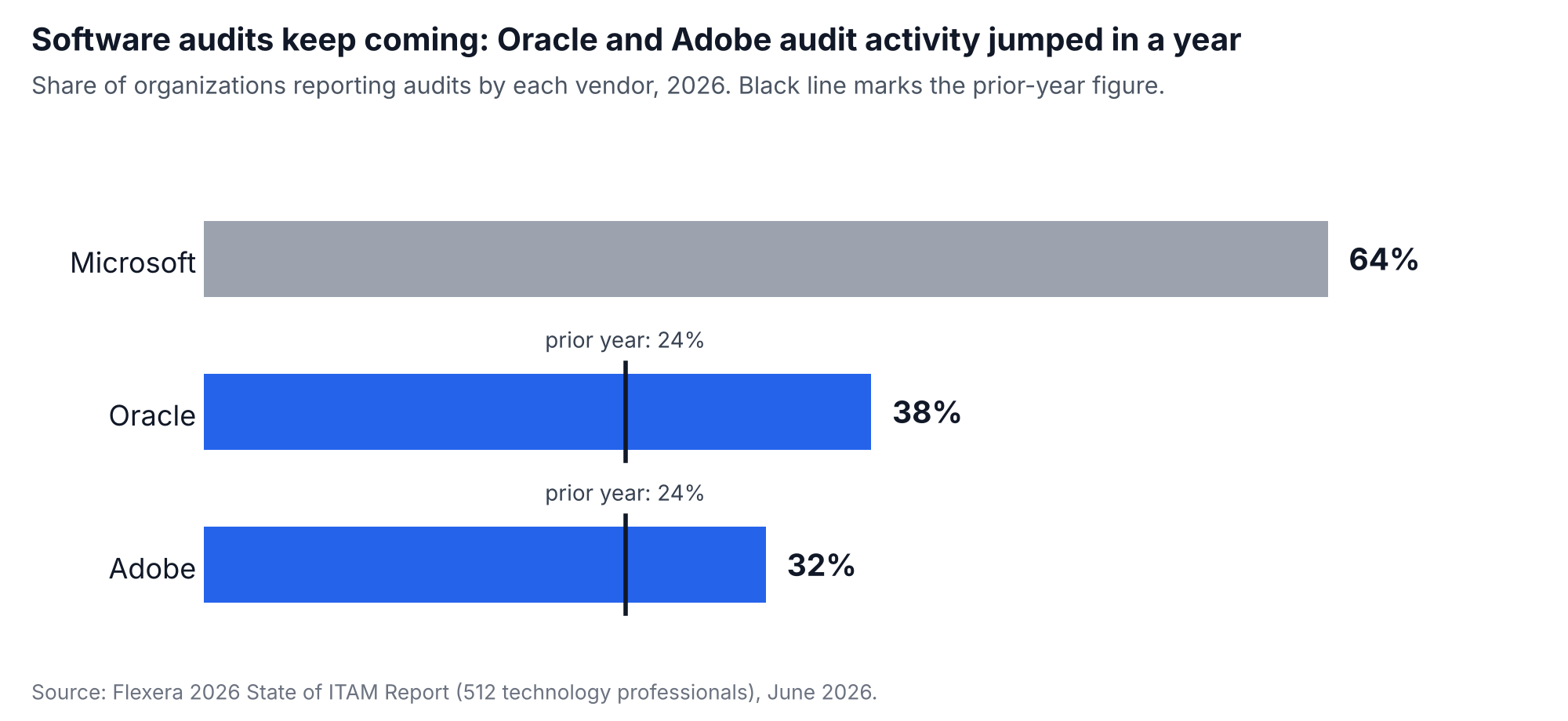
The numbers show the pressure. In Flexera’s 2026 State of ITAM Report, only 36% of organizations said they have complete visibility into their IT assets, and only 31% have accurate visibility into the AI software they use. Meanwhile, 48% were audited by a software vendor in the last year.
Automation and AI are how ITAM teams are closing that gap. Robotic process automation (RPA) handles repetitive, rules-based work, while AI reads unstructured data, spots patterns and increasingly acts on its own. Here is how that combination is changing three core areas of IT asset management.
1. Audit Readiness and License Compliance
Software audits are expensive and getting more common. In the same Flexera survey, 44% of organizations said they spent more than $1 million on software audits over the past three years, and ITAM teams reported spending 22% of their time responding to audits.
Organizations without reliable ITAM data struggle in audits. They cannot prove what they own, what is installed and what is in use, so they cannot challenge a vendor’s findings. Self-audits help, but done by hand they take weeks of pulling data from different systems.
Automation changes that. Software robots can continuously collect installation and usage data, match it against purchase records and license terms, and flag gaps before a vendor does. AI can interpret complex license rules and contract language that would otherwise need a specialist. The result is an organization that is always audit-ready, and an audit team that spends its time on analysis and negotiation instead of data gathering.
2. Faster Service Fulfillment
Requests for new software or hardware rarely follow a single path. They arrive by email, chat, service portal or phone, and often need approvals, contract checks and license changes before anything is delivered. Much of that information is unstructured, which is why fulfillment has traditionally depended on people reading and routing every request.
AI can now read those requests, understand what is being asked for and pass structured data to automated workflows. RPA then handles the steps: checking available licenses, routing approvals, provisioning the asset and updating the record. This is the shift Gartner has described for years, from automating individual tasks to automating and orchestrating whole processes.
For employees, that means faster delivery and accurate status updates. For IT, it means fewer manual handoffs, and reusing licenses that already exist before buying new ones.
3. Complete, Continuous Asset Management
Most organizations still rely on a mix of automated discovery and manual updates to keep their asset records current. That mix breaks down as estates grow across cloud, SaaS, remote workers and mobile devices, and as legacy systems remain in place during digital transformation.
Automation can take over the repetitive work: reconciling discovery data with purchase and invoice records, updating ownership when employees join, move or leave, and flagging devices and licenses that are no longer in use. AI adds the ability to spot anomalies, such as unexpected software, unusual cost spikes or devices that have gone silent, and to recommend what to do about them.
The staff time this frees up can go toward higher-value work: optimizing spend, supporting security teams and planning for new technologies like AI.
What to Look For in an AI-Ready ITAM Approach
IT complexity keeps growing with cloud adoption, mergers and acquisitions, hybrid work, mobile devices and now AI tools. When evaluating ITAM solutions or providers, look for:
- Native automation: RPA and AI built into the platform, not bolted on as scripts.
- Coverage beyond hardware: software, SaaS, cloud, mobile and telecom assets in one inventory.
- Connection to cost: assets linked to invoices, contracts and cost centers, so ITAM supports finance as well as IT.
- Integration: connections to ITSM, ERP, procurement and identity systems.
- Proof, not promises: a proof of concept on your own data before you commit.
How Asignet Helps
Asignet combines RPA, AI-powered data parsing and a real-time AI audit engine on one platform that covers IT, telecom, mobile, SaaS and cloud assets and the spend attached to them. Asignet’s managed services team handles exceptions and vendor interactions, and a working proof of concept can be delivered in 30 days.
Talk to Asignet about automating your IT asset management.