Software asset management (SAM) is the process of managing, controlling, licensing and optimizing your organization’s software. SAM affects more than how software is used. It also shapes automation, security, digitization, control of shadow IT and your future software strategy.
The main goals of SAM are to:
- Eliminate spending on unused software
- Ensure license compliance
- Reduce the risk of audit penalties and unplanned costs
- Improve business processes
- Avoid security breaches
- Optimize software investments
SAM helps make sure all license compliance obligations are met and removes risk from purchasing software. When automated, it also makes business processes more efficient and gives you visibility into how your organization uses its licensed software across its entire lifecycle. It’s not just about buying the right number of licenses at the start; it’s about making sure the licenses you pay for are actually in use.
Truths About Software Asset Management
The stakes are real. In the Flexera 2026 State of ITAM Report, only 36% of organizations said they have full visibility into their IT assets. Nearly half (48%) were audited by at least one software vendor, and 44% spent more than $1 million on audits. Microsoft remains the most active auditor, followed by Oracle and Adobe.
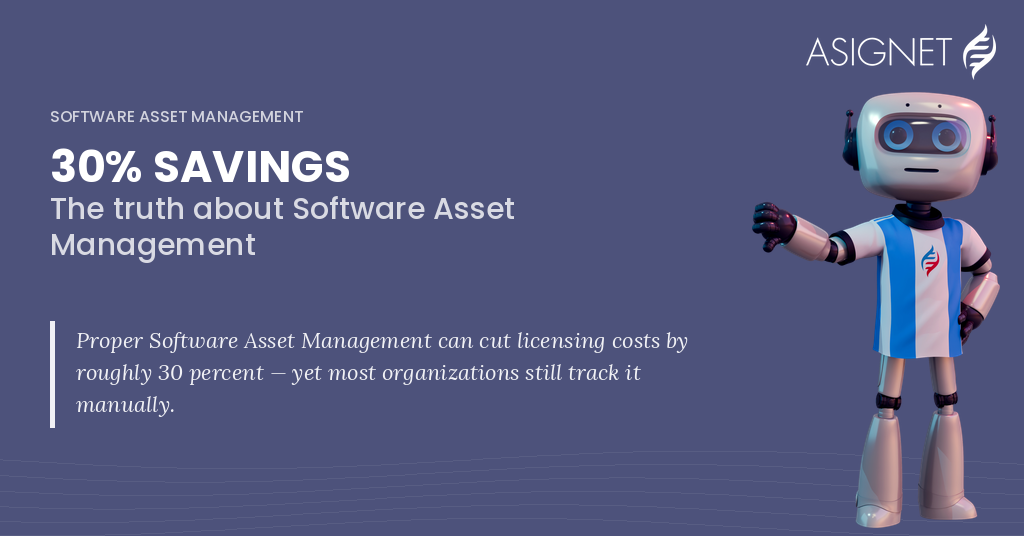
The savings are real, too. Gartner has found that organizations can cut software spending by as much as 30% by applying SAM best practices: optimizing software configurations, recycling licenses and using SAM tools.
Common Software Asset Management Mistakes
Preventing unnecessary spending means keeping control of your software: making sure everything is accounted for, the right licenses are in place and software is used appropriately. These are some of the most common SAM mistakes companies make:
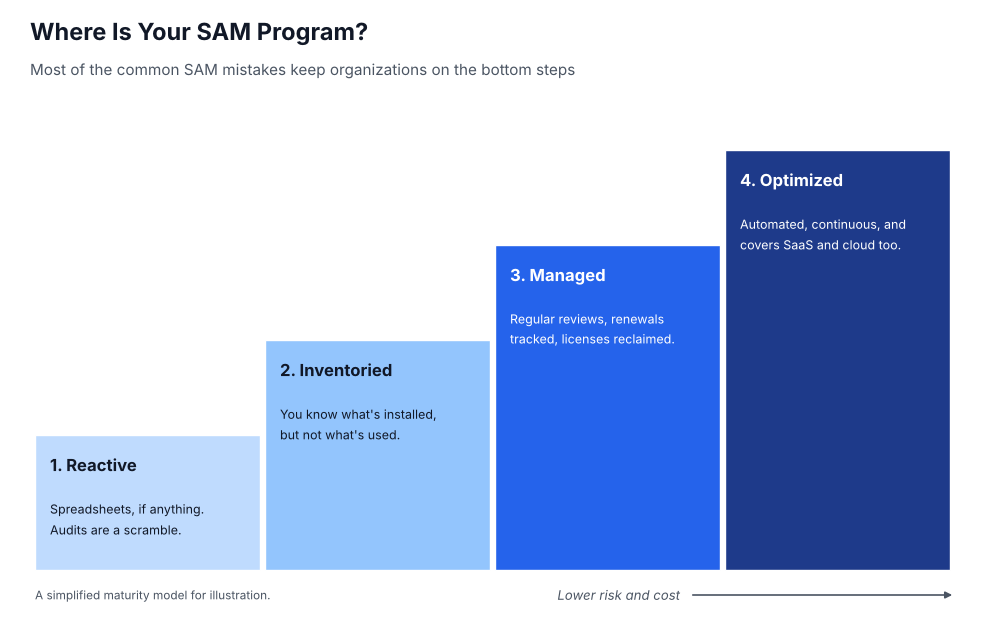
- No regular license reviews. Without periodic checks, companies keep paying for licenses that could be eliminated and miss renewals that need attention.
- No formal methodology. SAM needs a defined process, including regular audits of servers, desktops and devices, not occasional clean-up projects.
- The wrong people, or not enough of them. SAM requires people who understand licensing rules and can design and run a program based on best practices.
- Leaving cloud services out. Many organizations exclude SaaS and cloud subscriptions from SAM because they feel those licenses aren’t under their control, even though they are often the fastest-growing part of software spend.
- Relying on manual tracking. With spreadsheets and manual processes, there’s no way to quickly assess the cost and risk of new applications entering the environment.
- Not connecting SAM to the business. When IT teams don’t understand how software is used across the company’s business processes, it’s hard to know which licenses are truly needed.
- Incomplete license tracking. If existing licenses aren’t all tracked, no one knows which subscriptions are active and which need to be renewed.
Software Asset Management Best Practices
Avoiding those mistakes comes down to a few core practices:
- Build a complete inventory. Discover all software across on-premises systems, devices, SaaS and cloud, and keep it up to date continuously.
- Track usage, not just installations. Knowing who actually uses each application tells you which licenses can be reclaimed or downgraded.
- Reclaim and reuse licenses. Recycle licenses from former employees and inactive users before buying new ones.
- Review before every renewal. Right-size subscriptions before they renew, while you still have leverage.
- Stay audit-ready. Keep proof of entitlement and usage records current, so a vendor audit is a routine request rather than an emergency.
- Automate wherever possible. Automation keeps data accurate and frees your team to focus on optimization instead of data entry.
The Strategic Benefits of Software Asset Management
SAM helps organizations identify, control and protect their software assets. Done well, it lowers software costs, keeps the organization compliant and reduces risk, while giving IT and finance the data they need to plan future software investments.
Can Software Asset Management Be Automated?
Yes. Today there are many options for automating SAM, including software asset management as a service (SAMaaS). Benefits include:
- Lower costs, by using cloud-based tools instead of building and maintaining SAM infrastructure.
- Better compliance, by discovering all licenses across departments and locations.
- Optimized processes, through continuous discovery instead of periodic manual counts.
- Higher productivity, by giving users centralized access to the applications they need.
SAM practices also help keep applications updated with security patches, so your software stays secure and productive.
Asignet’s IT asset management solution uses hyperautomation to give you complete visibility into your software, SaaS and cloud licenses, so you can stay compliant and stop paying for what you don’t use. Talk to Asignet to learn more.