Every contract is a promise about price. Your team spends weeks negotiating a rate, a discount or a service level, signs it, files it, and moves on. Then the invoices start arriving, and nobody compares them with what was signed.
Most vendors don't overcharge on purpose. Rates get loaded wrong, discounts expire early, services keep billing after they're cancelled. The result is the same: you pay more than you agreed, every month, until someone checks.
A contract compliance audit is how you check. This article walks through how to run one, step by step, and how to get the money back when you find a difference.
What is a contract compliance audit?
A contract compliance audit is a review that compares what a vendor actually billed and delivered with what the contract says they should. It checks prices, discounts, quantities, services and terms, line by line, and turns every difference into a claim.
It works in both directions. It confirms the vendor is keeping its side of the deal, and it shows whether your own company is buying within the contract, or around it.
How to perform a contract compliance audit in 7 steps
1. Scope the audit
Don't start with every vendor. Pick the ones with the most spend and the most complex bills: telecom carriers, cloud providers, SaaS vendors, facilities and logistics are usual suspects. Decide the period to review, usually the last 12 months, and check how far back the contract lets you claim.
2. Collect the contracts
Gather the signed contract and every amendment, rate card, order form and renewal. The most recent document wins, so the order matters. If contracts live in inboxes and shared drives, this step alone is worth the audit: Business Spend Management keeps vendors and contracts in one place so the next audit starts here.
3. Gather invoices and usage data
Collect every invoice for the period, at line level, not just totals. Then add what proves what you actually received: inventory, receipts, usage reports, active users. Many vendors only offer detailed invoices in their portals; robots can log in and download them for you.
4. Turn contract terms into rules
A contract written in prose can't be checked by anyone but its author. Turn each commercial term into a rule you can test: price per unit, discount percentage, minimum or maximum quantity, which fees are allowed, when a service should stop billing.
5. Compare every invoice line
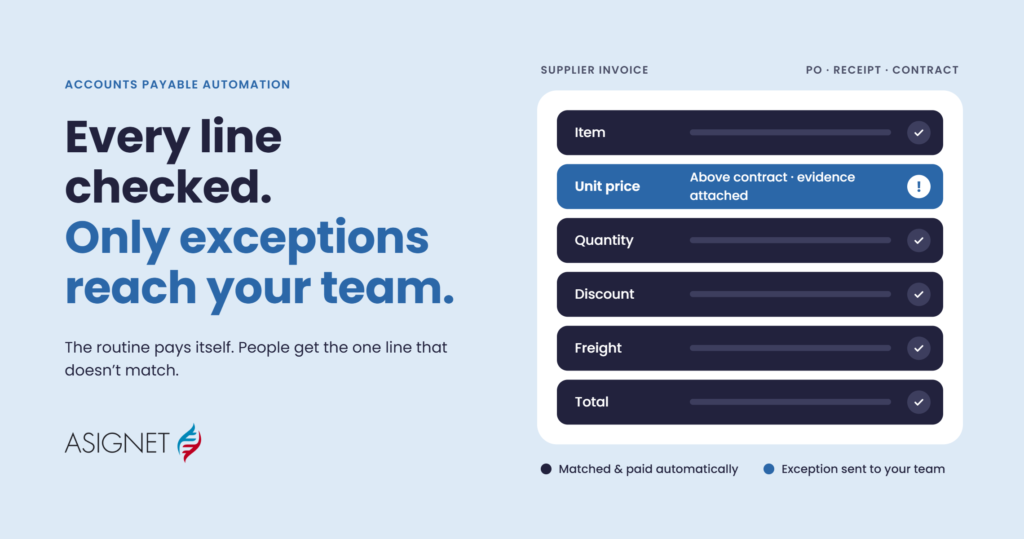
Test each line against the rules and against what you received. This is where most findings come from, and why sampling isn't enough: an error that hides on one line in a thousand still adds up. Invoice Validation checks every line of every invoice against the contract and your inventory, so this step runs every month instead of once a year.
6. Dispute and recover
A finding is worth nothing until it's credited. Send each discrepancy to the vendor with the contract clause and the invoice line attached, track it until the credit note arrives, and check that the credit actually shows up on the next bill. Asignet's team handles disputes with vendors end to end, until the money is back.
7. Fix the root cause
If a rate was loaded wrong, it'll be wrong next month too. Ask the vendor to correct it at the source, update your rules, and decide which checks should run on every invoice from now on.
What to check: a contract compliance checklist
| Check | What you're looking for |
|---|---|
| Unit prices | Every rate matches the contract or the latest amendment |
| Discounts and credits | Negotiated discounts are applied, and promised credits arrive |
| Quantities | You're billed for what was delivered or used, not more |
| Services | Every service billed was ordered and is still active |
| Fees and surcharges | Only fees the contract allows, at the agreed amounts |
| Taxes | Applied to the right location and the right items |
| Service levels | Missed SLAs generate the credits the contract promises |
| Renewals and price increases | Increases stay within the caps the contract sets |
Common findings
The same issues come up in almost every vendor contract compliance review:
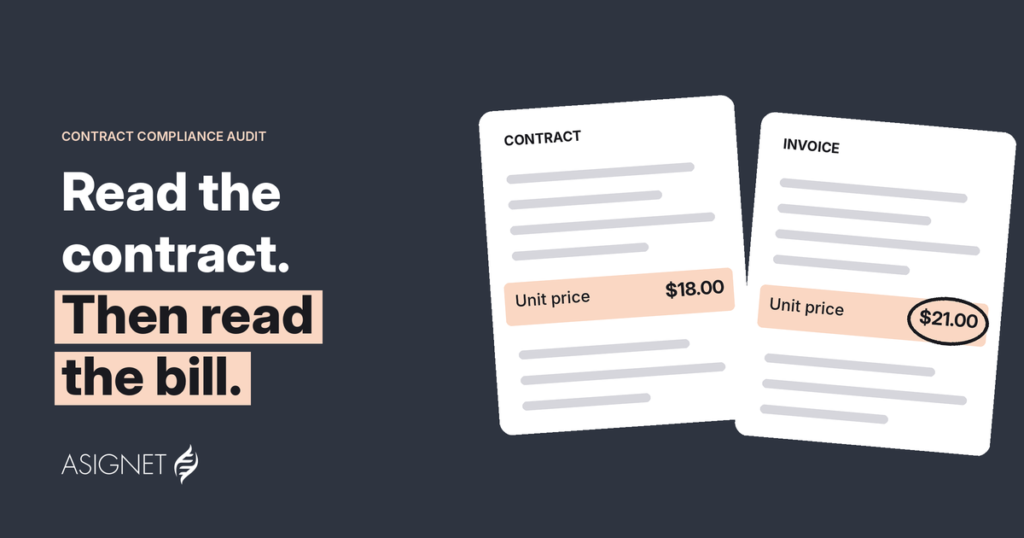
- Rates above contract, often from a price list that was never updated after negotiation.
- Expired discounts that the contract says should still apply.
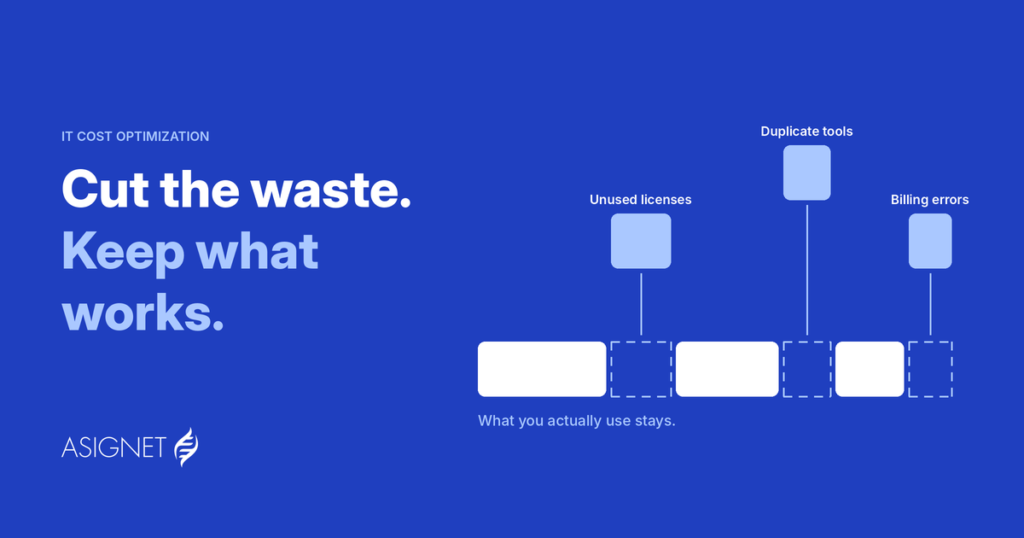
- Services billed after cancellation, like lines, licenses or support contracts nobody uses anymore.
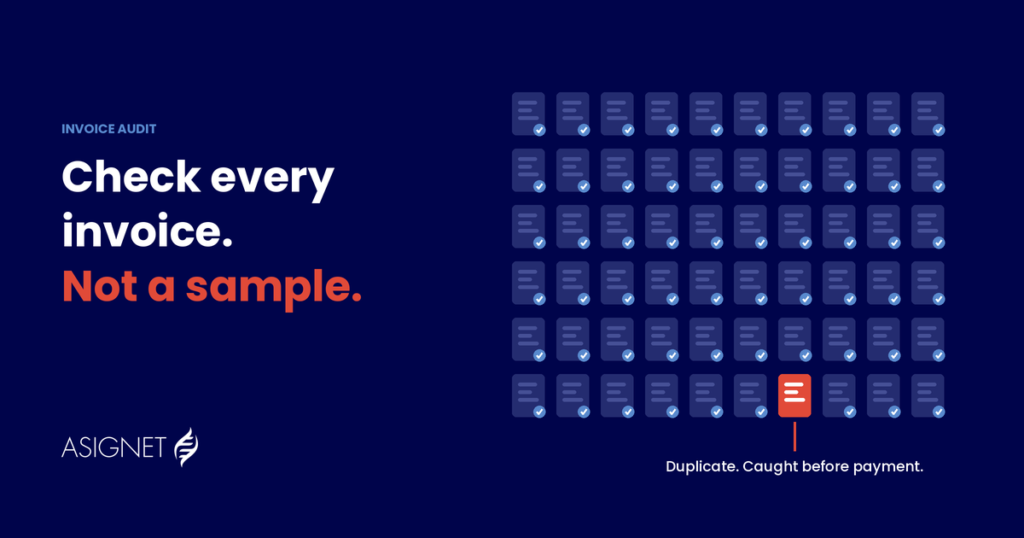
- Duplicate charges for the same item, sometimes on two different invoices.
- Unapproved fees that appear without being in the contract.
- Missing SLA credits that the vendor never volunteered.
They're most common where bills are long and change every month, which is why telecom, cloud and SaaS contracts are good places to start.
How often should you audit?
A yearly audit finds errors after you've paid them for twelve months. A better rhythm:
- Every invoice, automatically, for high-volume vendors with complex bills.
- Quarterly, for mid-size vendors and anything with usage-based pricing.
- Before every renewal, so you negotiate with a clean record of what went wrong.
- A full audit once a year, to review the contracts themselves.
How Asignet helps
Asignet turns the contract compliance audit from a yearly project into a monthly routine:
| Audit step | Asignet service |
|---|---|
| Keep contracts and vendors in one place | Business Spend Management |
| Collect invoices from vendor portals | RPA as a Service |
| Check every invoice line against the contract | Invoice Validation |
| Confirm what was delivered and is in use | Technology Lifecycle |
| Recover overcharges from the vendor | Disputes |
Start with one vendor
Pick your largest or most complex contract and audit the last few months of invoices against it. Asignet checks every line against the contract and recovers the differences for you: see Invoice Validation and how disputes work.
Frequently asked questions
What is a contract compliance audit?
A contract compliance audit compares what a vendor billed and delivered with what the contract says, line by line, to find overcharges, missing discounts, unapproved fees and services billed after cancellation.
How do you perform a contract compliance audit?
Scope the audit, collect the contracts, gather invoices and usage data, turn contract terms into rules, compare every invoice line, dispute and recover the differences, and fix the root cause.
How often should contract compliance audits be done?
Check high-volume vendors on every invoice, review others quarterly and before each renewal, and run a full audit of the contracts once a year.
Who should perform a contract compliance audit?
Usually procurement, finance or internal audit, often with help from the business owner of the contract. Many companies use a specialist for complex categories like telecom, cloud and SaaS.
What happens after a contract compliance audit?
Each finding is disputed with the vendor until it's credited, and the root cause is fixed so the same error doesn't repeat.