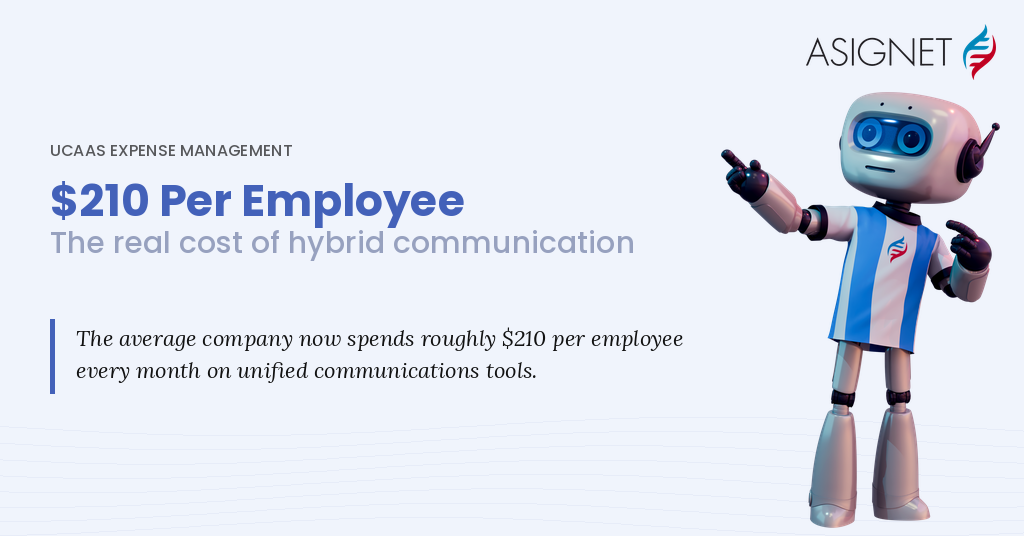
Over the last few decades, the way companies operate has changed dramatically, and the COVID-19 pandemic accelerated that shift. Many businesses now rely on remote and hybrid teams, and the tools those teams need to collaborate have driven communication costs higher than ever. That has pushed many businesses to look for new ways to control them.
But many businesses don’t see the problem. Collaborating across locations through chat, video and cloud calling has transformed how teams work, and companies love it. Still, there’s a downside: these new ways of collaborating aren’t always budget-friendly, and they often create costs you didn’t expect.
When you review your unified communications as a service (UCaaS) vendor bills, or notice that you don’t have clear bills at all, consider what that means for your company’s visibility, usage analytics, asset management, platform management and identity and access management. These are all areas where proper cost control helps a business thrive while saving money every month.
Businesses need to rethink how they collaborate and how remote teams can work more efficiently. Doing so makes it much easier to control communication costs while still giving people the connected feeling of an office, which means better collaboration across your workforce and less money spent on unnecessary travel.
UCaaS Expense Management vs. Traditional Telecom Expense Management
UCaaS Expense Management
UCaaS combines communication tools such as calling, video meetings, messaging and conferencing into a single cloud service. UCaaS expense management focuses on controlling the costs of those services, and it suits SMBs and enterprises that want to consolidate their communications expenses. It typically includes a centralized online portal for managing all of these services alongside traditional telecom expense management (TEM).
UCaaS expense management offers visibility into how communication services are used: who is using what, when and for how long. With that information, you can identify usage trends and decide which services and devices best support company growth. Platforms like Microsoft 365, with Microsoft Teams, put all communication channels in one place, including chat, email, messaging, video calls, extensions and direct dial numbers.
Traditional Telecom Expense Management
Traditional TEM focuses mainly on fixed-line and wireless expense management (WEM). It offers features such as detailed usage reports and device inventory management, but it may not cover UCaaS-specific needs such as license usage analysis, user provisioning, bandwidth allocation, dial plans and a UCaaS control portal.
Traditional TEM works well for businesses that already manage their telecom expenses through an existing portal, such as a billing platform or expense management application, because it can integrate with it to provide visibility into fixed and wireless bills.
Both approaches help businesses manage communication expenses across many devices; the differences are in the details. UCaaS expense management includes the features you would expect from traditional TEM and adds visibility into UCaaS services, while traditional TEM is often easier to integrate with platforms you already have.
You don’t always have to choose. Asignet combines both in the same platform: a full telecom expense managed service and dedicated UCaaS expense management.
The 3 Challenges of Managing UCaaS Expenses
1. License Volume and Usage
There are many types of licenses, and large businesses find it hard to track things like Zoom or Microsoft Teams licenses and usage with traditional methods. That leads to more errors when trying to inventory all the platforms employees use. Not all platforms integrate every channel, either: your employees might use one provider for video conferencing and another for business calling.
2. Pricing and Licensing Structures
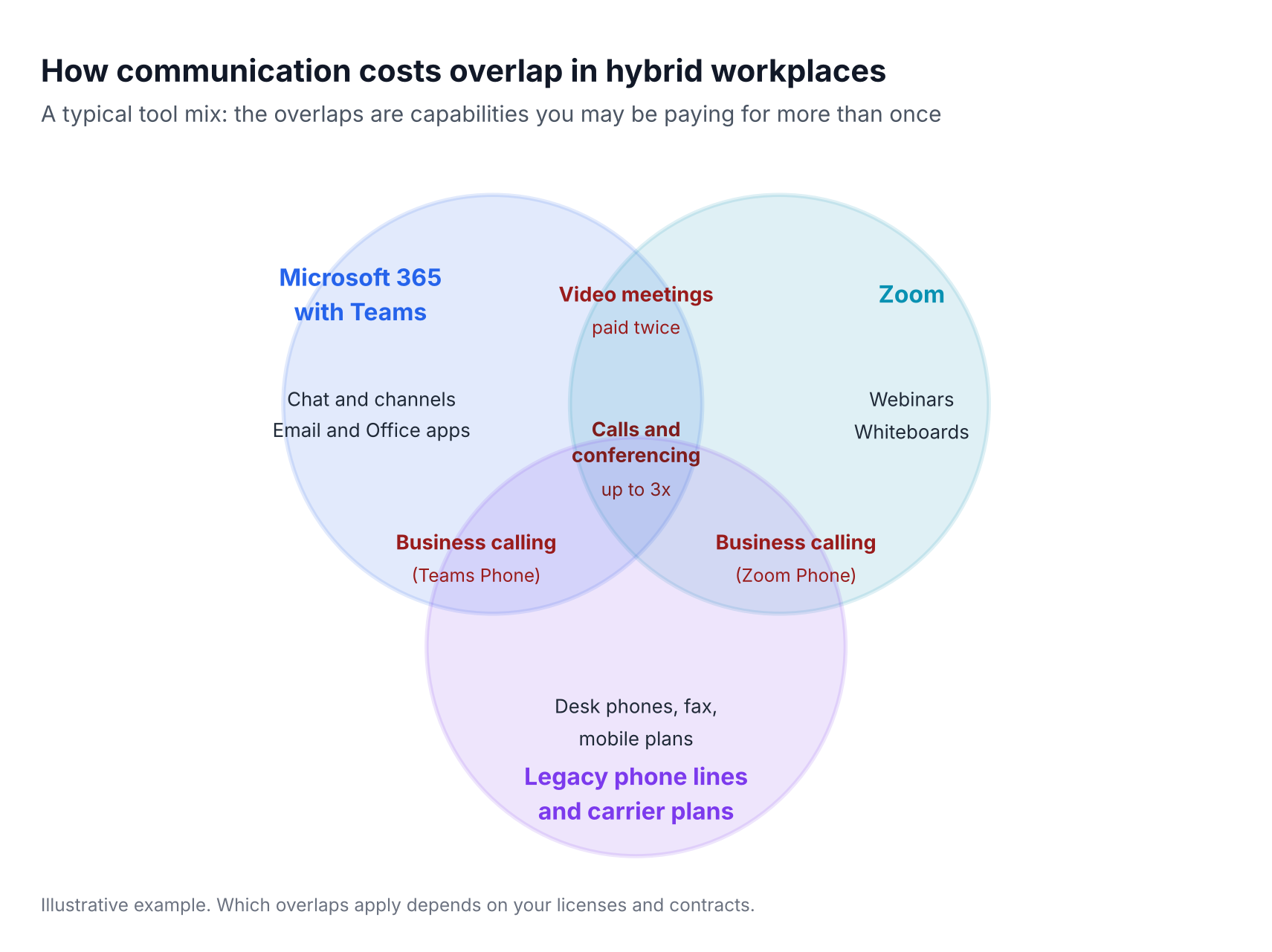
No two UCaaS systems are priced the same way, which makes it difficult to compare providers and get the best deal. It can also lead to overspending on services you don’t need. For example, a company may standardize on Google Meet for video conferencing, while some teams prefer Zoom and others already have Microsoft Teams through Microsoft 365. Before long, the company is paying for several tools that do the same job.
3. Visibility
Controlling UCaaS spend depends on seeing which products and features employees actually use, so you know everyone is getting their money’s worth. Without that visibility, waste goes unnoticed. For example, a large share of licenses may never be activated or used. And by the time you discover you are overpaying, you may be locked into contracts that are hard to change.
Reduce Costs With a UCaaS Expense Management Solution
A UCaaS expense management solution helps you cut expenses by simplifying and automating expense management. Key advantages include:
- License volume and usage monitoring: UCaaS costs are tied to the number of licenses you pay for, and that’s hard to track as people join, move and leave. Expense management software monitors each user’s license usage, so you can reclaim unused licenses and avoid paying for seats nobody needs.
- Usage analytics: the software analyzes calling and usage data to show where spending is highest and which vendor contracts are worth renegotiating, so managers can save money at the next renewal.
- Cost optimization: the solution identifies opportunities such as better-fitting plans, volume discounts and international calling options, and recommends the right ones for your company, so your team doesn’t have to do all the legwork.
Take Control of Your UCaaS Spend With Asignet
Controlling UCaaS costs starts with visibility. You need to see what is happening with your UCaaS spend, especially since communication tools are now a significant part of the IT budget. Asignet gives you real-time control over how much is spent and where, and shows how UCaaS resources are used, including extensions, locations and devices, so usage stays where it should be.
Talk to Asignet about controlling the communication costs of your remote and hybrid teams.