What Is Virtualization?
Virtualization is technology that separates IT services from the physical hardware they run on. Software divides one physical machine into multiple virtual machines, each with its own operating system and applications, so the hardware’s full capacity can be shared across different users, tasks or environments.
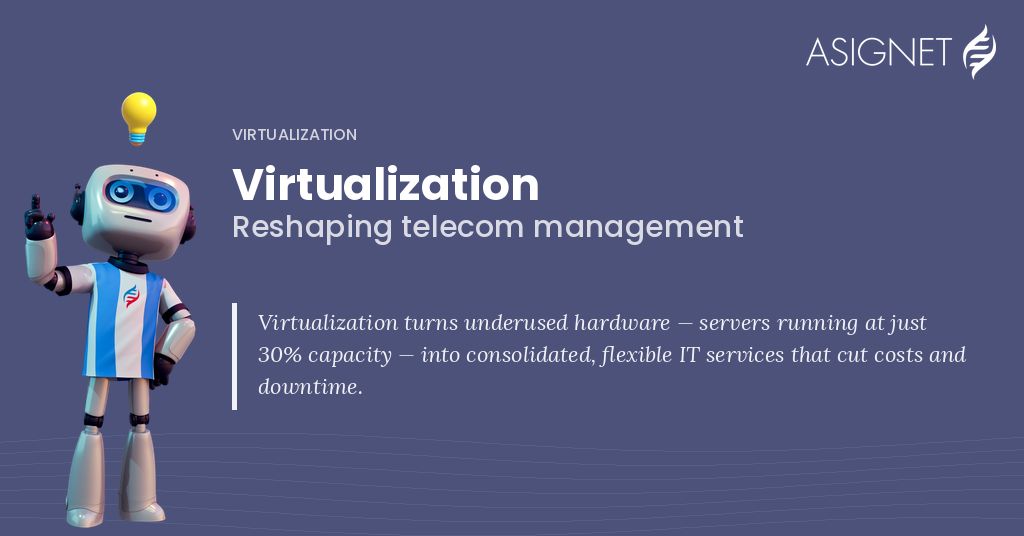
Consider a simple example. A company has three physical servers, each dedicated to one job: email, the company website and an internal legacy application. Each server uses only about 30% of its capacity, but the company keeps all three running because each job has always had its own machine. For years, that was the safest approach: one server, one operating system, one task.
With virtualization, all three workloads can run as separate virtual machines on a single physical server. Each one stays isolated from the others, but the same hardware is used far more efficiently, and the other two servers can be retired or repurposed.
Virtual machines are also easy to create and copy, which makes them useful as test environments for new applications before they go into production.
How Virtualization Changed Telecom
Virtualization didn’t stop at servers. Telecom networks have followed the same path, replacing dedicated hardware with software running on standard servers or in the cloud. Phone systems have moved to cloud calling, routers and network appliances have been replaced by software-defined WAN (SD-WAN) and virtual network functions, and even SIM cards are becoming eSIM profiles activated by software.
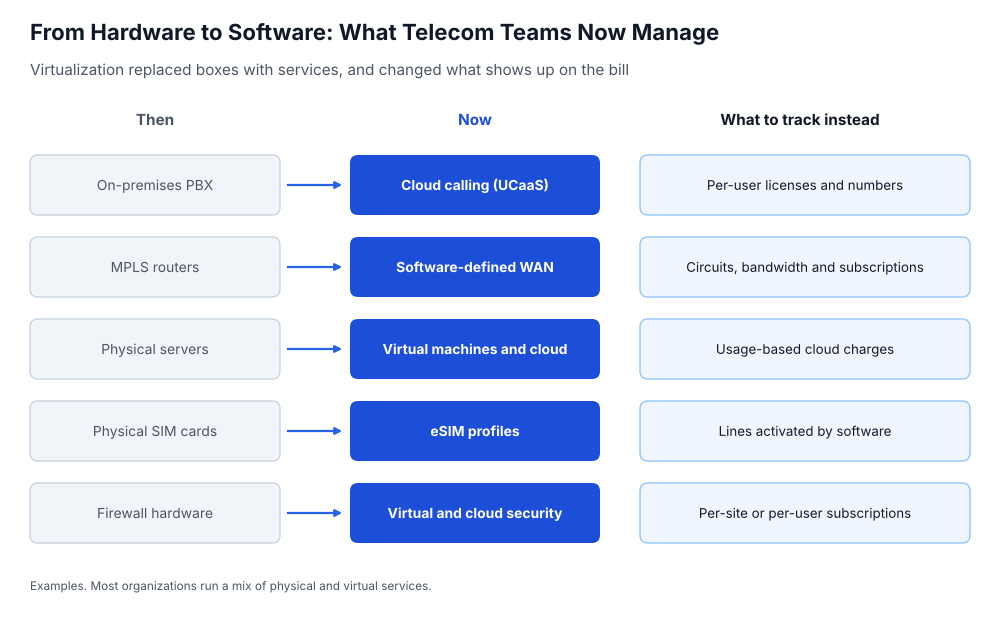
For service providers, virtualization reduces operating costs and makes it faster to launch and scale new services. For enterprises, it means telecom looks more and more like IT: services are provisioned in software, scale up and down on demand and are billed as subscriptions or by usage, rather than as fixed equipment and circuits.
That changes telecom expense management (TEM). There’s less hardware to track, but far more services, licenses and usage-based charges, and they can be added or changed in minutes. Keeping inventory and invoices accurate now depends on automation that keeps up with that pace.
Virtualization’s Benefits for Telecom Management
Minimized Downtime
Time is money, especially in IT. Network failures and disruptions can cost companies heavily in lost revenue, lost productivity and recovery costs. In ITIC’s 2024 Hourly Cost of Downtime Survey, more than 90% of mid-size and large enterprises said a single hour of downtime costs over $300,000, and 41% put it at $1 million to over $5 million.
Recovering legacy, hardware-based systems often takes much longer. Virtual machines can be backed up, restored and moved from one physical host to another quickly, and often without interrupting service. That helps companies keep operating through hardware failures, outages and disasters.
Reduced Hardware and IT Support Costs
Virtualization is a key factor in maximizing resources and minimizing costs. Consolidating many workloads onto fewer physical platforms reduces hardware spending, and virtualized assets often require fewer resources than their physical counterparts.
The savings extend beyond the IT department. Virtualization lets companies keep running existing services while avoiding the capital needed to buy and commission new equipment. It also reduces energy use, data center space and the staff time needed to maintain hardware.
Increased Productivity
Virtualization makes IT teams more productive. New servers and services can be provisioned in minutes instead of weeks, and new applications or configurations can be tested in virtual machines before they’re deployed. Users benefit too, because IT resources can be accessed over the network from many devices, and virtual machines and networks are portable, which makes provisioning and remote access easier.
Keep Virtualized Telecom Services Under Control
Virtualization makes telecom more flexible, but also easier to lose track of. Every virtual service, license and subscription still costs money, and usage-based charges can grow quickly when no one is watching.
Asignet’s telecom expense management and IT asset management solutions use automation to keep inventory, usage and invoices for both physical and virtual services accurate and up to date. Talk to Asignet to learn how we can help your organization manage costs as your services move to software.