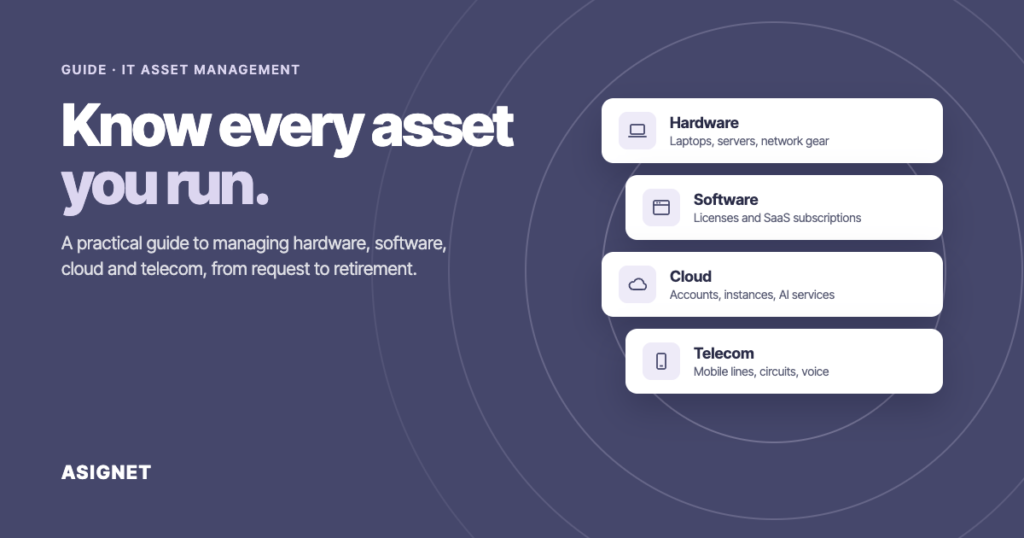
Companies need tight control of their IT lifecycle spend, so that money isn’t wasted and can go toward new technology investments instead. That starts with IT decision-makers knowing exactly which IT assets are operating in their networks, so they don’t risk overspending.
Many C-level executives are well aware of this need. But the market is full of solutions that address specific problems rather than the entire asset lifecycle, so organizations are looking for scalable solutions and providers that can meet many IT infrastructure needs at once.
What IT Lifecycle Management Requires
If you’ve been considering IT lifecycle management for your company, you know it means accounting for every resource in your environment, including operating systems, hardware, middleware and applications, along with the dependencies between them. To succeed, you need:
- A business process and an owner assigned to each resource
- A schedule of reviews and updates based on how critical each resource is
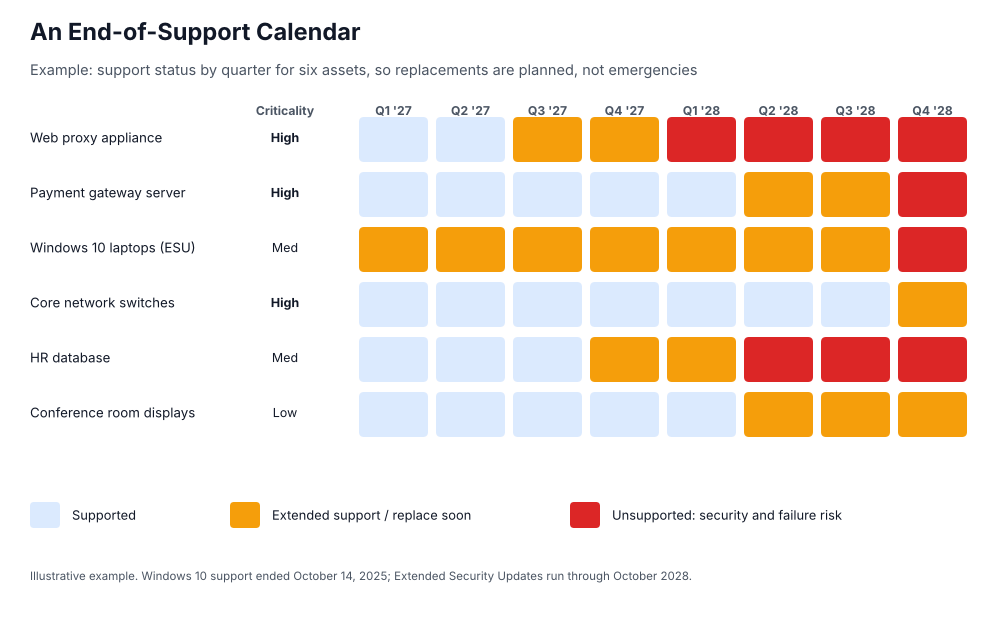
- A calendar of expiration and end-of-support dates, with lead times mapped to vendor and internal product roadmaps
Everything Scheduled, Predicted and Planned
In an IT lifecycle management approach, everything is scheduled, predicted and planned. That lets you anticipate issues and minimize interruptions. When CIOs, CFOs and chief security officers (CSOs) understand the benefits of a complete end-to-end approach, they’re better able to address the issues facing their own organizations.
This ecosystem of connected, interdependent resources must be managed so everything runs smoothly and stays up to date, which can be a daunting task. From a cybersecurity perspective, unpatched technology leaves your network vulnerable to attack, and outdated technology poses other threats as well.
Windows 10 is a recent example. Microsoft ended support on October 14, 2025, so devices still running it no longer receive security updates unless the organization pays for Extended Security Updates, which cost more each year and run only through October 2028. Following lifecycle management practices, knowing where your risk areas are and staying current on them, helps keep your business secure and avoids surprises like these.
The Risks of Poor IT Lifecycle Management
Lost Business Opportunities
When your business processes aren’t adaptable, you lose the ability to move with the market, new technologies and your customers. If key parts of your business processes depend on systems and dependencies you can’t control, you’re locked out of opportunities.
Failed Business Processes
A failure affects your revenue and your reputation. It also changes the company’s focus: instead of taking care of business, everyone is distracted by the failure.
Unplanned Costs
When something fails, getting back online can be extremely expensive. Costs are almost always much higher in crisis mode than when work is part of a business plan.
For example, say you have a web proxy appliance that always runs smoothly and receives automatic updates from the vendor. Unfortunately, no one noticed the vendor’s announcement that it would no longer be supported after a certain date. The date comes and goes, and a year later the appliance stops working. Now you have to buy a new appliance unexpectedly and pay extra to get it installed in a day.
An optimized lifecycle management practice keeps you aware of what is critical in your environment and helps you avoid these costs.
Lost Customers
An outage, whether of your entire business or a single business process, can be critical no matter how long it lasts. Imagine the connection to your payment processor fails because of an outdated piece of hardware. Customers won’t accept being unable to pay, and many will take their business elsewhere.
Manage Your Entire IT Lifecycle With Asignet
Asignet combines an application platform as a service (aPaaS), patented automation technology and managed services to manage the full lifecycle of your IT assets, from procurement and inventory to support dates, renewals and retirement.
Talk to Asignet about optimizing your IT lifecycle management.