As telecom expense management (TEM) software and services have matured, many companies have chosen to outsource this function instead of handling it in-house. The reason is simple: a TEM service can save a company substantially more money than an internal team working with spreadsheets and carrier portals.
This article explains what TEM covers, the hidden costs of managing telecom expenses internally, how a managed TEM service compares and what to look for when choosing a provider.
TEM typically covers two areas:
- Services: the voice, data, wireless and connectivity services you pay carriers for each month.
- Assets: the equipment and inventory behind those services, such as mobile devices, phone systems, circuits and the users and locations they’re assigned to.
The Hidden Costs of Managing Telecom Expenses In-House
The visible cost of in-house TEM is the staff time spent processing invoices. The bigger costs are the ones nobody sees.
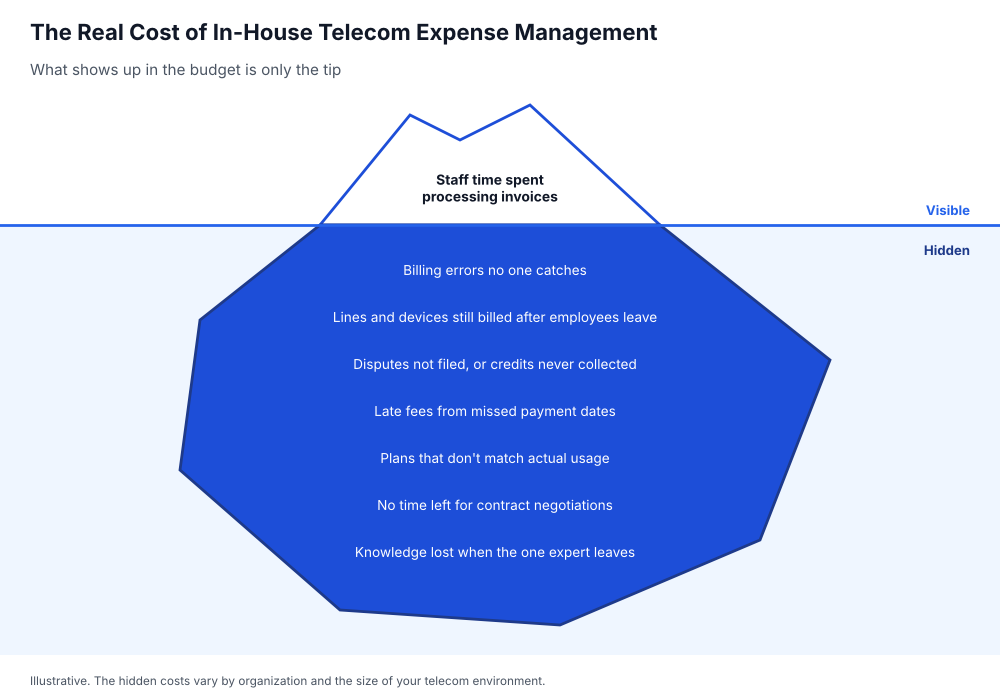
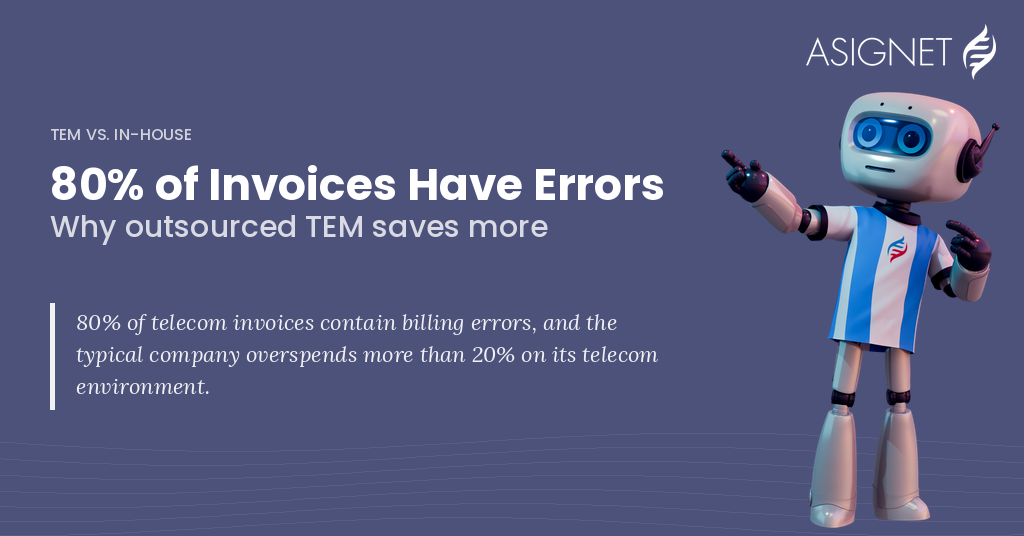
Telecom invoices are long, complex and different for every carrier, and billing errors are common. An internal team processing them by hand rarely has time to audit every line, file disputes and follow up until credits arrive. Lines and devices belonging to former employees keep getting billed, plans drift out of line with actual usage, and contract renewals pass without anyone negotiating better rates.
In many companies, telecom expenses are managed by one or two people. When they leave, much of the knowledge about carriers, contracts and inventory leaves with them. For smaller IT teams, telecom invoices can also take time away from strategic projects and push deadlines back.
How a TEM Service Saves More
TEM software alone helps reduce costs through better usage analysis and reporting. Employees get instant reports instead of waiting for invoices or spending hours digging for information.
A managed TEM service goes a step further by handling the work for you. Providers like Asignet use robotic process automation (RPA) and AI-based invoice parsers to capture data from every carrier invoice, from AT&T and Verizon to regional and international carriers, instead of relying on manual data entry. That reduces human error and speeds up the entire process.
A good TEM provider can automate the full invoice lifecycle:
- Invoice capture and upload
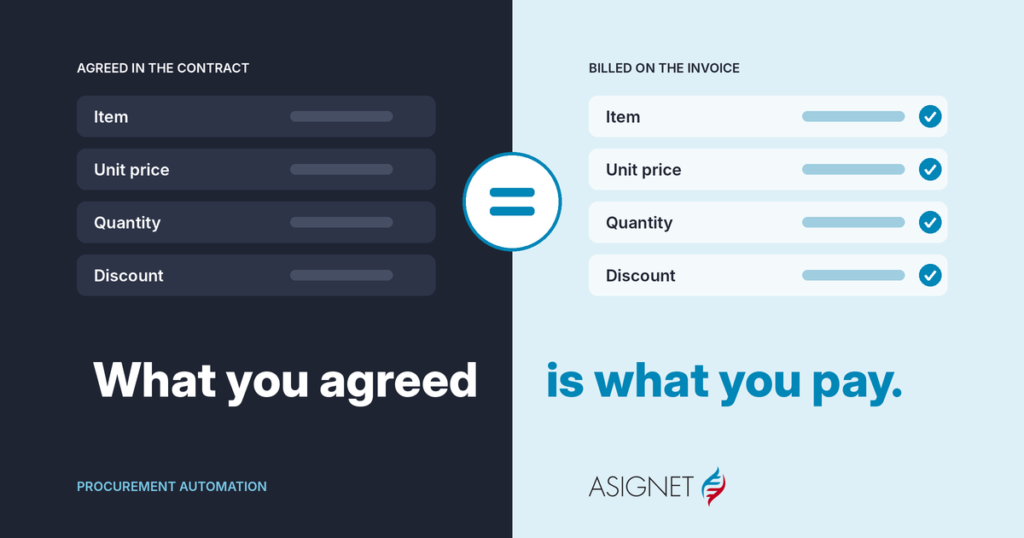
- Auditing against contracts and inventory
- Billing disputes and credit recovery
- Cost allocation and chargeback
- Approval workflows and bill payment
- Integration with your accounts payable and financial systems
Because savings are found and recovered continuously, costs typically decrease over time once an effective program is in place, whether through catching billing errors, removing unused services, moving to better-fitting plans or negotiating better carrier rates.
Choosing the Right TEM Provider
There’s no one-size-fits-all TEM solution. Each business has different needs depending on its size and industry. Keep these factors in mind when evaluating providers:
Industry Experience
A provider with experience in your industry will understand where the savings opportunities are. For example, a company running call centers benefits from analytics on call volumes and minutes per month, which can save thousands of dollars a year. Retailers with many locations may care more about circuits and connectivity at each store.
Clear Pricing and Contract Terms
Make sure all costs are spelled out in writing before you sign. Ask whether the provider charges extra for services such as billing support, dispute management or training, and whether there are fees for adding carriers or terminating the contract. Be wary of providers who try to upsell telecom services you don’t need.
Clear Responsibilities
Agree up front on who is responsible for what. Will an internal team own telecom, or will each department be responsible for its own expenses? Who approves new services, and who covers charges outside the scope of the contract? Defining this in the service agreement prevents surprises on future invoices.
Automation and Integration
Ask how the provider processes invoices. Automated invoice capture and auditing are faster and more accurate than manual processing, and integration with your ERP and accounts payable systems removes duplicate work.
Outsource Your Telecom Expense Management With Asignet
For most companies, the benefits of a managed TEM service outweigh the risks of outsourcing. It saves money, increases productivity and gives you visibility into telecom costs that’s hard to achieve in-house.
Asignet combines RPA, AI and experienced analysts to manage your telecom expenses end to end. Talk to Asignet to find out how much your organization could save.