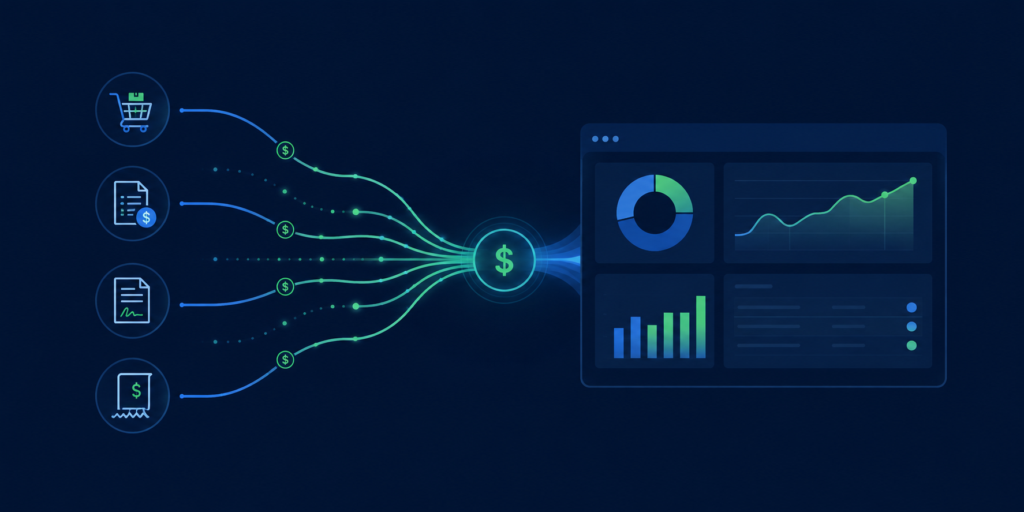

Communications is one of the largest recurring expenses in the modern enterprise — and one of the easiest to overpay. Between fragmented carrier invoices, unused services, mobile fleets, and a growing stack of cloud and SaaS platforms, most organizations genuinely don’t know what they’re paying for. Telecom Expense Management is how they take that spend back under control. This guide explains what TEM is, how it works, what it costs, and how to tell if it’s right for your business.
What Is Telecom Expense Management?
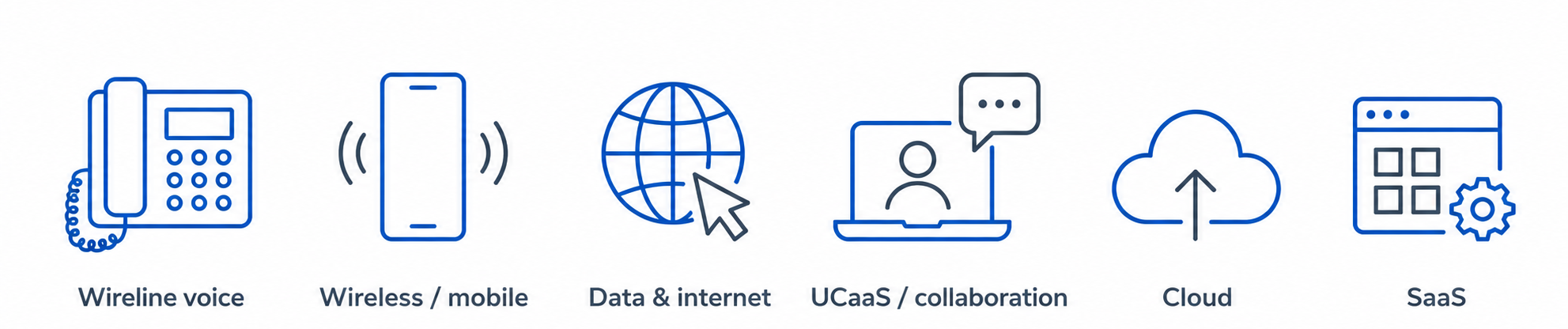
Telecom Expense Management (TEM) is the practice of managing, controlling, and optimizing an organization’s spending on communications services, such as wireline and wireless voice, data and internet connectivity, mobile devices… as well as the cloud and UCaaS platforms that now sit alongside them. TEM combines software, disciplined processes, and often managed services to give a company one accurate, centralized view of what it buys, what it actually uses, and what it gets billed.
The goal is simple to state and often difficult to achieve without help. Organizations want to stop paying for billing errors, unused lines and licenses, and contracts that have quietly drifted out of alignment with reality. A mature TEM program touches the entire lifecycle of a telecom service — from sourcing and ordering, through inventory and invoice validation, to ongoing usage optimization and cost allocation back to the business.
Why the category exists: Gartner projects worldwide IT spending will reach $6.08 trillion in 2026, with communications services alone accounting for roughly $1.36 trillion of it. At that scale, even small percentages of billing error or waste translate into very large numbers — and telecom billing is notoriously error-prone. (Gartner, Oct 2025.)
What Is TEM Software?
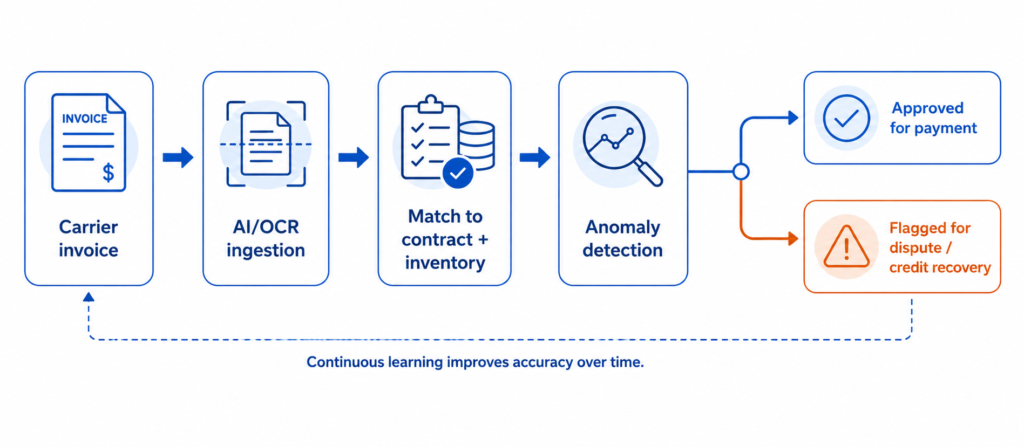
TEM software is the technology platform that automates the work of telecom expense management — ingesting carrier invoices, matching every charge against contracts and a live inventory of services, flagging errors and unused resources, routing disputes, and reporting on spend across the whole organization. Learn more about TEM software.
Providers such as Asignet deliver TEM as part of a broader IT-spend platform — pairing AI- and RPA-driven invoice validation with managed services across telecom, mobile, SaaS, and cloud, so charges are checked against contracts, approvals, and real usage before money ever leaves the business. If you’re evaluating tools and providers rather than learning the fundamentals, our TEM Solutions overview covers software and managed services in depth.
Why Telecom Expense Management Matters
Telecom spend is uniquely hard to control for three reasons:
- TEM is fragmented across dozens of carriers and hundreds of invoices.
- It is dynamic, as lines and services are added and changed constantly
- It is opaque because carrier bills are dense, inconsistent, and frequently wrong.
Most finance and IT teams simply lack a single source of truth for what they own and use.
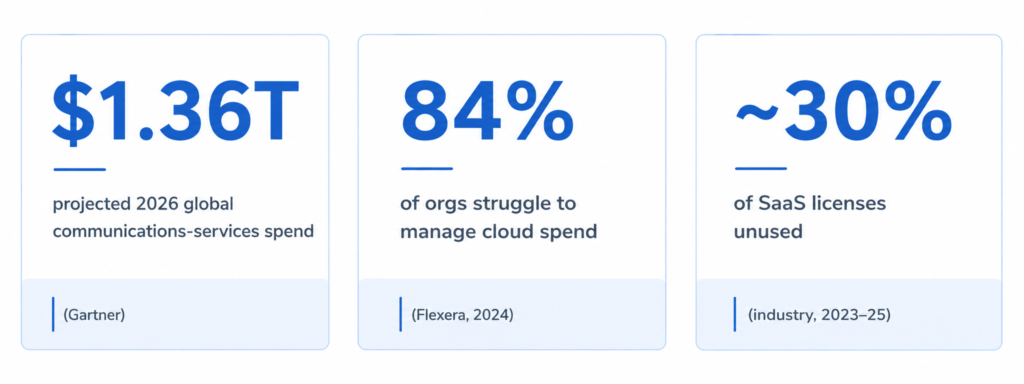
That gap is expensive. Independent telecom audits routinely surface recoverable credits — from billing errors, unused services, and off-contract rates — and audit firms commonly report those recoveries running anywhere from 10% to 30% of annual telecom spend (an industry rule of thumb, not a single study). Meanwhile, the problem is spreading beyond telecom: cloud and SaaS costs are now the fastest-growing and least-governed line items in IT.
“Most organizations don’t have a cost problem. They have a visibility problem. You can’t optimize what you can’t see.” – Jason Horak, CRO
How TEM Works: The TEM Lifecycle
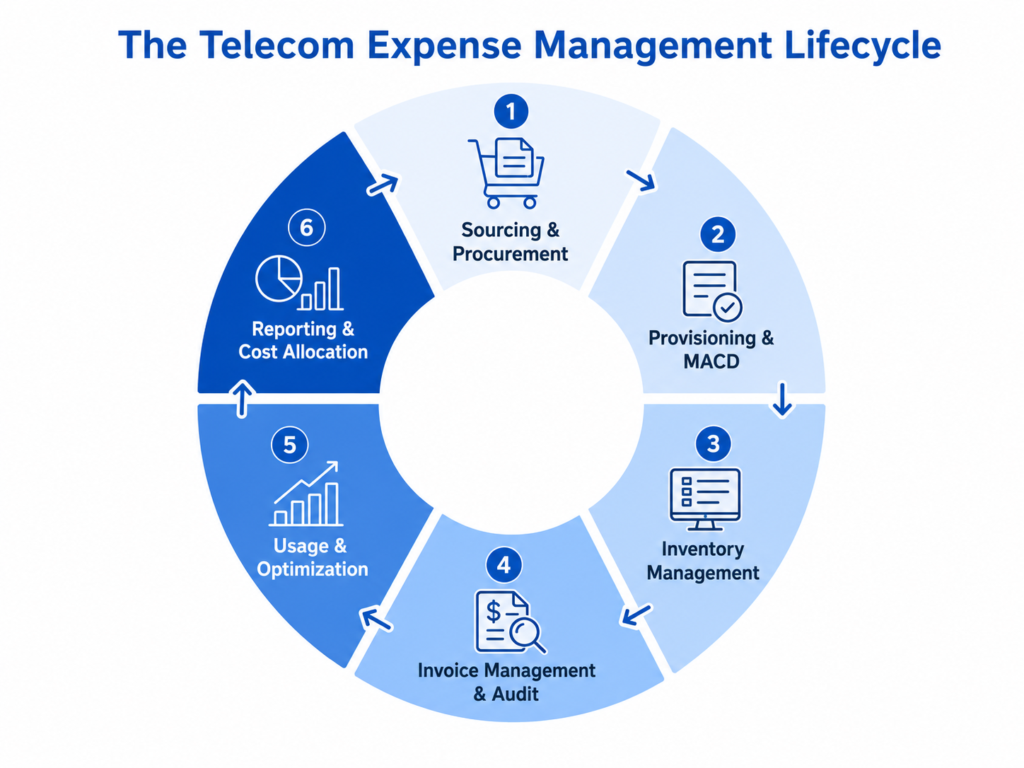
Effective TEM isn’t a one-time audit. It’s an ongoing lifecycle that keeps spend accurate as the business changes. Most TEM programs run these six stages continuously:
| TEM Stage | What happens |
|---|---|
| 1. Sourcing & procurement | Negotiating carrier contracts and rates, and standardizing how new services are ordered. |
| 2. Provisioning & MACD | Managing Moves, Adds, Changes, and Disconnects so the service inventory stays current — and disconnected services actually stop billing. |
| 3. Inventory management | Maintaining a live record of every line, circuit, device, and plan, tied to its contract and cost. |
| 4. Invoice management & audit | Ingesting invoices and validating each charge against contract, rate, and inventory — flagging errors for dispute and credit recovery. |
| 5. Usage & optimization | Analyzing actual usage to right-size plans, eliminate unused services, and pool or reallocate resources. |
| 6. Reporting & cost allocation | Allocating costs (chargeback/showback) to the right departments and giving finance clean, auditable spend data. |
The Core Components of TEM
Whatever the vendor or delivery model, a complete TEM capability is built from the same functional building blocks:
- Inventory & asset management: a live, accurate record of every service, line, circuit, and device.
- Invoice processing & audit: automated ingestion and line-by-line validation against contracts and rates.
- Dispute & credit recovery: identifying billing errors and pursuing carrier credits to completion.
- Contract management: tracking terms, rates, and renewals so you never drift off-contract.
- Usage management & optimization: right-sizing plans and eliminating unused or duplicate services.
- Cost allocation & chargeback: assigning spend to the right cost centers with auditable accuracy.
- Reporting & analytics: dashboards that turn fragmented invoices into decisions.
Beyond Telecom: The Rise of Technology Expense Management
The “telecom” in TEM is increasingly a historical label. As voice moved to UCaaS platforms like Microsoft Teams and Zoom Phone, and as SaaS and cloud infrastructure became core operating costs, the same discipline — inventory, validate, optimize, allocate — now applies to a much wider technology estate. Many vendors and analysts now use Technology Expense Management to describe TEM extended across SaaS, UCaaS, and cloud.
The reason is financial: Gartner projects software spending will grow 15.2% to $1.43 trillion in 2026, faster than any other IT segment. Zylo finds companies use only about half of the SaaS licenses they pay for. The waste that TEM was built to catch in telecom now exists, at greater scale, in the cloud.
The Role of AI and Automation in TEM
This is where modern TEM separates from its spreadsheet-and-audit origins. Automation doesn’t just speed the old process up and create efficiencies. It changes what’s possible:
- Invoice ingestion (OCR): reads any carrier format automatically, with no manual data entry.
- Anomaly & error detection: AI flags charges that don’t match contract, rate, or usage patterns.
- Contract parsing: extracts terms and rates so every invoice is checked at the service-ID level.
- Robotic process automation: software “robots” navigate carrier portals to place orders and file disputes like a human would.
- Predictive optimization: models usage to recommend plan changes before you overpay.
- Zero-touch validation: every line of every invoice checked before payment, at scale, without added staff.
Wireless and Mobile Expense Management
Mobile is complex enough to be its own discipline, often called Managed Mobility Services (MMS) or Mobile/Wireless Expense Management. It adds concerns telecom TEM doesn’t face: device procurement and lifecycle, BYOD policy, unified endpoint management (UEM) and security, international roaming, and usage pooling across large fleets. For organizations with hundreds or thousands of devices, mobile is frequently where the fastest savings and the biggest security gaps both live.
The Benefits of TEM
- Cost savings: recovered billing errors, eliminated waste, and better-negotiated rates. ETMA cites optimization ranges of 5–25% on negotiated rates and 2–15% off monthly bills.
- Visibility: a single source of truth for every service, cost, and contract across the organization.
- Efficiency: automation frees finance and IT from manual invoice processing and dispute chasing.
- Compliance & control: auditable cost allocation, cleaner books, and enforced sourcing policy.
- Security & governance: knowing exactly what services and devices exist is the first step to securing them.
On savings claims: credible providers quote ranges, not guarantees. (Ranges above: ETMA, “The ROI of Technology and Telecom Expense Management.”)
Who Needs TEM?
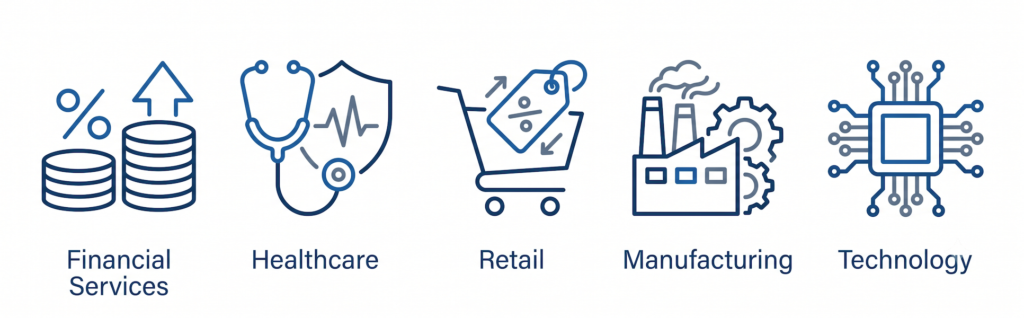
TEM earns its keep wherever telecom spend is large, fragmented, or hard to see. That usually means organizations that are multi-carrier, multi-site, or managing a sizable mobile fleet — but the value shows up differently depending on who’s asking:
| Role | What TEM delivers |
|---|---|
| CFO / Finance | Predictable spend, recovered dollars, and auditable cost allocation. |
| IT / Telecom | Accurate inventory, less manual admin, and control over MACD. |
| Procurement | Better contracts, benchmarked rates, and enforced sourcing. |
| Accounts Payable | Validated invoices and fewer payment errors. |
Choosing the Right TEM Approach
TEM is delivered in three broad models. The right one depends on how much of the work you want to own versus hand off:
| Model | Best for |
|---|---|
| Software-only | Teams with the in-house resources to run the process themselves and just need the platform. |
| Software + managed services | Most enterprises: The platform plus specialists who handle exceptions, disputes, and vendor interactions. |
| Fully outsourced | Organizations that want to offload telecom management almost entirely. |
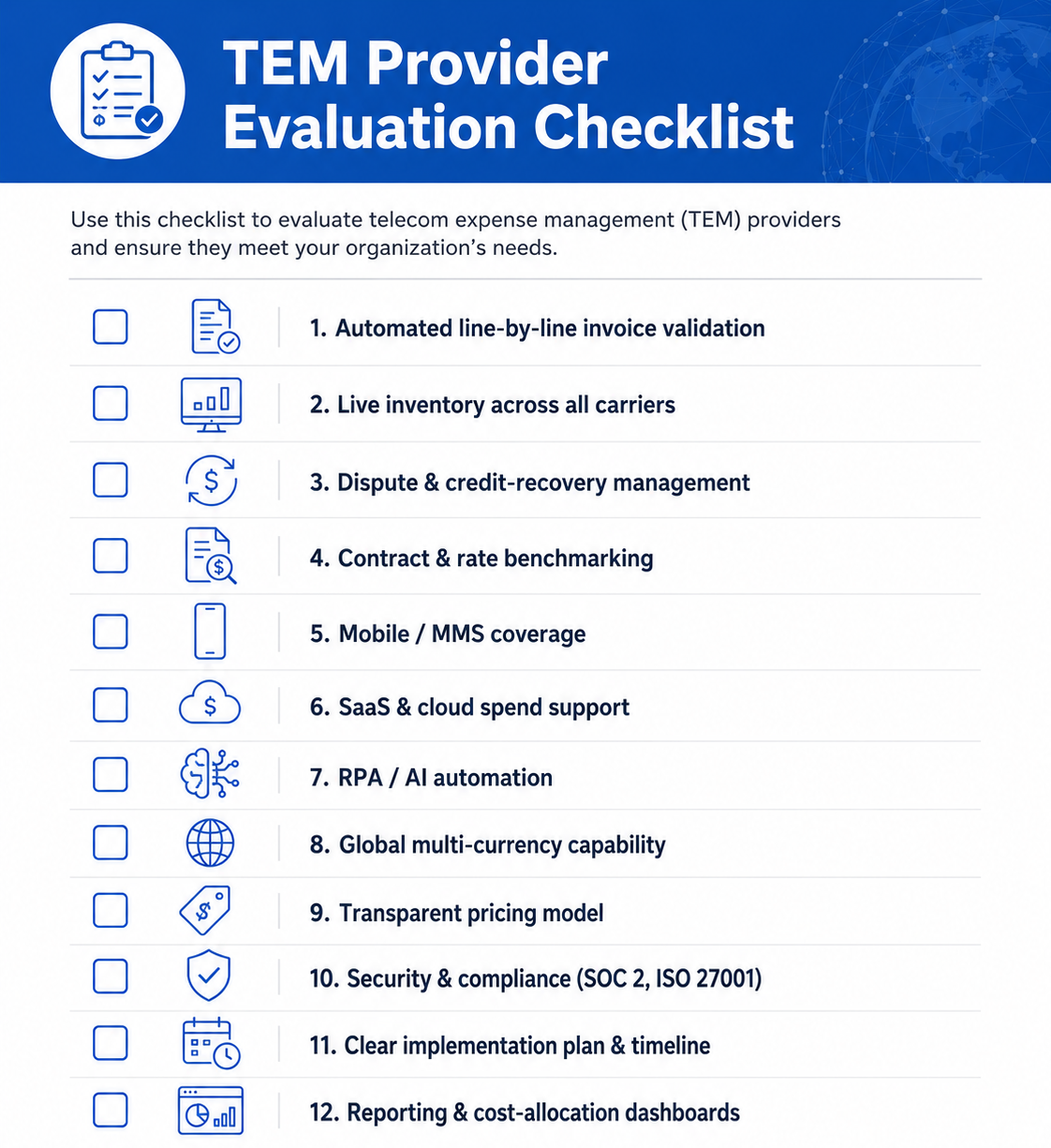
From the questions you ask a vendor to how you scope savings guarantees and implementation, choosing a TEM provider is its own skill. To see how a modern software-plus-services platform works, explore Asignet’s TEM Solutions.
Frequently Asked Questions About TEM
What’s the difference between a one-time telecom audit and ongoing TEM?
A telecom audit is a point-in-time review that recovers past overcharges. TEM is the continuous discipline that keeps spend accurate afterward — so the errors, unused services, and contract drift don’t simply return a few months later. An audit is a snapshot; TEM is the ongoing control system.
How is TEM priced?
Common models include a fixed monthly or per-line fee, a percentage of spend under management, or a shared-savings arrangement where the provider takes a portion of the savings or recovered credits. Managed services cost more than software-only but typically deliver more savings and require less of your team’s time. Ask any provider to model total cost against expected savings before committing. If you’d like to try yourself, here’s a calculator.
How long does a TEM implementation take?
Implementation timelines depend on the size and complexity of your telecom environment. With Asignet, most organizations can begin seeing value within a few weeks, while a full rollout across all carriers, locations, and services typically takes 4 – 8 weeks. Our implementation is designed to minimize disruption by connecting to your existing carrier portals, contracts, and billing data. Because deployment is phased, many organizations begin identifying billing discrepancies and savings opportunities before the full implementation is complete.
Can TEM manage global, multi-country telecom?
Yes. Enterprise-grade TEM platforms handle multiple carriers, currencies, languages, and regional tax and compliance rules. Global reach is a key differentiator to check for if you operate across borders; some providers manage spend across 100+ countries. Asignet is built for enterprise organizations with complex, global operations. We support multiple carriers, countries, currencies, and billing formats, giving you a centralized view of telecom spend while validating invoices against the specific contracts and rates that apply in each market.
What data or access does a TEM provider need to get started?
To begin, we typically need:
- Access to carrier billing portals or recent invoices
- Telecom contracts and rate agreements (if available)
- Basic information about your telecom inventory and services
- Access to any relevant procurement or cost center data
Our team handles the onboarding process and configures the platform to your environment, allowing automated invoice collection, contract validation, and continuous monitoring with minimal effort from your internal team.
Sources
- Gartner, “Gartner Forecasts Worldwide IT Spending to Grow 9.8% in 2026” (Oct 2025). gartner.com
- Flexera, “State of the Cloud Report 2025” — 84% cite managing cloud spend as the top cloud challenge. flexera.com
- Zylo, “2024 SaaS Management Index” — ~49% license utilization; ~$18M average annual license waste. zylo.com
- ETMA, “The ROI of Technology and Telecom Expense Management.” etma.org
Ready to see what modern TEM looks like in practice? See how Asignet validates every line of every invoice — across telecom, mobile, SaaS, and cloud — before you pay: Explore Asignet TEM Solutions